|
G2
Memorial Wall of Honor
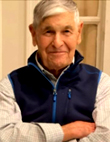
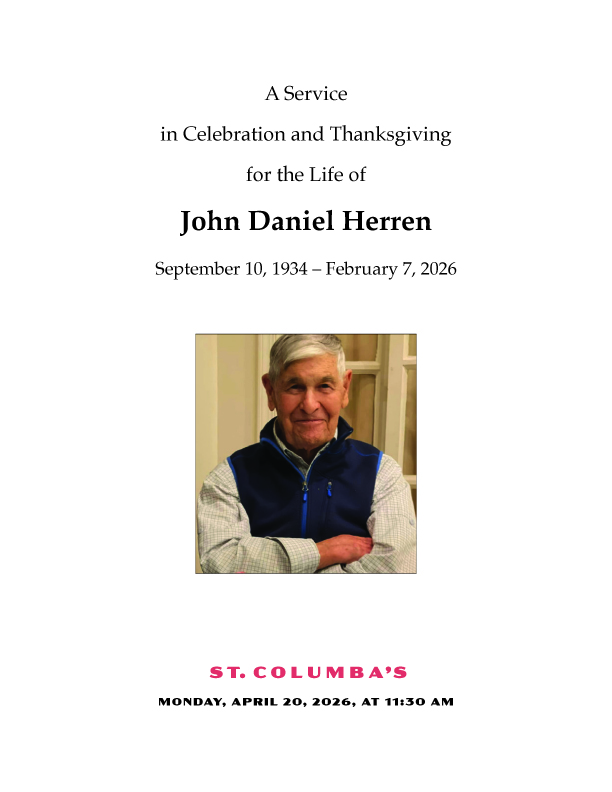
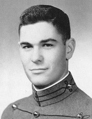
John Daniel Herren
Class of June, 1958
|
 |
 |
| Research
done by Claradell Shedd, webmaster |
|
From 1958 Howitzer: John comes from an Army family and from a tour in
the Army and is determined to carry on the tradition set by a father
and brother. The Academic Department didn't make it easy for John; but
an earnest desire for a service career and his patient attitude assured
his success here and will continue to so in the future. His smile and
pleasant personality make him friends with all. |
| John Daniel Herren |
|
| Year |
x |
Rank |
x |
Status |
|
| June, 1958 |
x |
Graduated |
x |
Company G2. At the time of John's
graduation, his father, Lt. General Thomas Wade Herren, was commanding
general at the First Army, Fort Jay, Governor's Island, NY |
| June 4, 1958 |
x |
Branch/2nd Lt |
x |
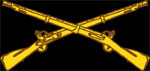
US Army; Infantry. Enlistment at
Fort Meade, MD. |
| 1958 |
X |
US Army |
X |
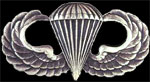
Graduated Infantry and
Airborne, Fort Benning, GA |
| December,
1958 |
X |
US Army |
X |
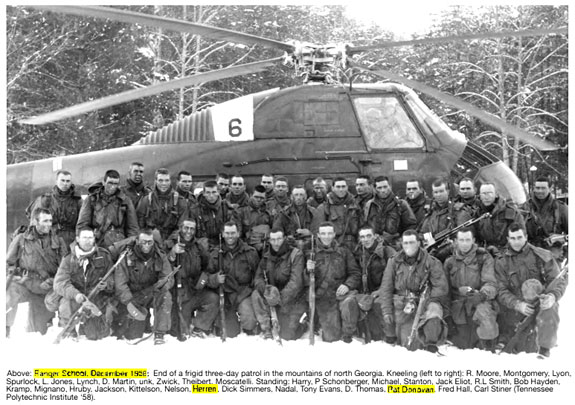
Graduated, Ranger School,
Fort Benning, GA |
| 1959-1961 |
|
US Army |
|
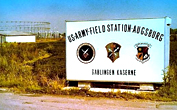
2nd Infantry, Sheridan
Kaserne, Gablingen Field Station, Augsburg, Germany |
| 1961 |
X |
US Army |
X |
Headquarters, 24th Division |
| 1962 |
X |
US Army |
X |
TIS |
| 1963 |
X |
US Army |
X |
AdC CG 2nd Division |
| 1964-1965 |
X |
US Army |
X |
CoCO 23 Infantry |
| August 14-September
13, 1965 |
x |
US Army |
x |
Aboard the USNS General
Maurice Rose (T-AP-126) in the Panama Canal. Troop carrier for
1,200 of 1st Air Cavalry troops for 32-day trip to Quy Nhon, Vietnam.
Ship departed New York on 14 August and arrived via Long Beach
and Pearl Harbor beginning to debark troops in Quy Nhon, South
Vietnam on 13 September 1965. |
| November,
1965 |
X |
US Army |
X |
14-17 Nov: LZ X-Ray, la
Drang Valley, Vietnam commanding B Company, 1st Battalion, 7th
Cavalry |
| 1966 |
X |
US Army |
X |
S3 1st Bn 7 CavDiv, Vietnam |
| 1966-1968 |
X |
US Army |
X |
ROTC, Georgetown University,
Washington, DC (MA 71) |
| June
15, 1968 |
x |
Family |
x |
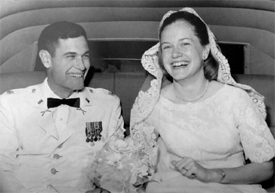
Married Sally Hand at
Christ Episcopal Church, Georgetown, Washington, DC |
| 1969 |
X |
US Army |
X |
Armed Forces Staff College |
| August,
1969 |
x |
Family |
x |
Daughter Elizabeth born. |
| 1969-1970 |
X |
US Army |
X |
Headquarters, MACV (Military
Assistance Command) |
| 1970-1974 |
X |
US Army |
X |
ODCSO DA |
| 1974-1977 |
X |
US Army |
X |
XO 3Bde, CO 1/87th Infantry,
IG 8 Div, Germany |
| July, 1977 |
x |
Family |
x |
Son John Michael born. |
| 1977-1979 |
x |
US Army |
x |
CO DRC Baltimore |
| March, 1979 |
x |
Family |
x |
Daughter Sarah Allison
born. |
| 1980 |
x |
US Army
|
x |
National War College |
| 1980 |
x |
US Army |
x |
OASD ISA (NATO Policy, OSD) |
| January 31, 1985 |
x |
US Army |
x |
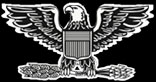
Retired from active duty as Colonel.
Fort Myer, VA. |
| 2004+16
years |
|
Retirement |
|
Cofounded Wounded Warrior
Mentor Program at Walter Reed Army Hospital |
| 1985 |
X |
US Army |
X |
Fgn Area Sp OASD ISA |
| Present |
X |
Family |
X |
Living in Bethesda, MD. |
| February
7, 2026 |
x |
Family |
x |
Deceased. |
| April 20,
2026 |
X |
Family |
X |
11:30am: Memorial scheduled
for April 20, 2026 at St. Columba's Episcopal Church. To be buried
later in Arlington National Cemetery.
View
service live streaming for John Herren memorial. |
|
My
Tour with the 24th in Germany...
written Spring, 2009 |
|
 |
My Tour
with the 24th in Germany 1959-1962
By John Herren, Colonel, USA, (Ret.), Bethesda, Maryland
In February 1959, I was part of a group of
young 2nd Lieutenants fresh out of Airborne and Ranger schools
checking into our first Army assignment, the 2nd Battle Group,
2nd Infantry, 24th Infantry Division. We were stationed in Gablingen
on an old German Air Force base about a 20-minute drive from
Augsburg. The Division was spread between Augsburg and Munich.
The Division replaced the 11th Airborne Division, which had
been demobilized (Our NCOs told us that the reason they brought
in the 24th was to repair relations with the local German populace,
which were pretty bad because of the airborne troopers off-duty
conduct).
“A” Company was like a number of companies in the
Battle Group. Company commanders were Reserve Officers who had
fought in Korea and had been promoted but were subject to reductions
in force (riffed) when the Army downsized. They
were old, experienced Captains who, with the help of some good
career NCOs, knew how to run an infantry unit. Although most
companies had an Executive Officer, there was a shortage of
officer platoon leaders. I found myself as the only one in my
company, which was the case throughout the Battle Group.
My First Sergeant, Willingham, was old school, having fought
in WW II and Korea. Most of the troops, and definitely the NCOs,
were more scared of him than they were of the CO. He would sit
at his desk with his feet propped up, a cigarette dangling out
of his mouth, and read the riot act to NCOs and soldiers he
had summoned to his office. I don’t think he had much use
for brand new 2nd Lieutenants, but he gave me good advice, and
he told me when he saw me doing something dumb; he really taught
me a lot about soldiers and leadership.
The enlisted men in my company were generally from the Midwest.
They had been drafted in 1958, and joined the Division right
from Ft. Riley. Many of them were single. The married ones were
not authorized to bring dependents over, but some did anyway.
They lived on the economy with no Army support. They
were a good group of men and in their short two years in the
Army became real soldiers.
We all were tested many times by our field training
at Hohenfelds and Grafenwohr, and at Wintershield I and II.
Those days bring back memories of freezing cold, long marches,
C-rations, and a mess hall that always seemed to arrive late.
We trudged across frozen and snowy terrain carrying our sleeping
bags and wearing heavy thermo boots. This was during the era
when the Berlin Wall went up and we were preparing for a possible
Russian attack on Germany.
There were also Army Training Tests (ATTs), Unit
competitions, Spartan barracks, and the isolation of Gablingen
where German bus service was the only way for enlisted men to
get into town when they were off duty. My
platoon had one of those ATTs shortly after I arrived, and we
came out tied for first place in the Battle Group, which boosted
my standing, and the platoon’s, with the First Sergeant
and CO. When we weren’t in the field,
there were the daily inspections, morning runs, weapons cleaning
and training, and classroom instruction on various subjects,
including the prevention of venereal disease.
One particular subject got our Division Commander,
General Walker, relieved when he pushed an anti-communist “Pro-Blue”
program on the Division. He had purchased the books himself
and ordered the officers to read them and teach classes to the
troops. One kind of inspection our NCOs
and the officers always dreaded was the short-notice drop-ins
by our Assistant Division CO, General Maroun. One time he came
to “A” Company, which we had hustled to prepare, making
sure the troops and barracks were in pristine condition. The
only soldier who didn’t measure up was a redheaded PFC
who had just joined us; he needed a haircut and didn’t
have a clean uniform. We made sure he was not in sight of the
General. General Maroun seemed pleased
with the inspection. But as he and the CO were walking outside
the building after the inspection, who should the General see
carrying garbage out the back but the redhead! General Maroun
zeroed in on him, and on our CO.
Sports were big in the Division and I was assigned
to coach the Battle Group basketball team for a couple of months
before a Special Services “jock” lieutenant showed
up to take over. Our team eventually won
the USAREUR championship that made our Battle Group Commander,
Colonel Ward, very happy.
For a young lieutenant on his first assignment
with troops, my days with the 24th Division in Germany were
a great learning experience that got me off on the right foot
in pursuing an Army career. I owe that good start to the officers,
NCOs and the young soldiers I was privileged to lead.
Some years ago I learned that the men of “A”
Company had started having biennial reunions. This is an example
of the bonding effect that serving together in a good division
like the 24th had on these young troopers.
I salute them for their effort and for their
service during the Cold War!
John Herren, Colonel, USA, retired, Bethesda,
Maryland
The Taro Leaf, Vol 63(2) Spring 2009, pg. 41.
|
| Update
from 1968 10th Reunion Directory |
| Get photo from family. |
|
Living at 4668 Garfield Street, Washington,
DC. My career has been typical--troop duty in Germany, school
at Benning, aiding a General, and then commanding a rifle company
in Vietnam where my unit, the 1/7 Cavalry fought the historic
"Battle of la Drang." What haven't I done? No wife,
no horse, no mustache--yet!
|
Update
from 1988 30th Reunion Directory
Photo below. Left: John, Sally, and children John, Sarah, and
Elizabeth. Boating in DC area. |
|
John writes: As a typical Army brat, I grew
up on Army posts, mostly in the South, allthough we did manage
tours in Korea and Japan after WWII. My dad was a cavalry officer
who I remember gave young straight legs at Ft. Benning instruction
on how to fight on horseback during some of my early Army post
years.
Following graduation, I did the normal tours as an infantry
officer: airborne/ranger, tours in Germany and Ft. Benning with
the advanced ciurse in between. One highlight of my troop career
was as a company commander with the 1st Airmobile Test Division,
then deploying with them to Vietnam as the 1st Cavalry Airmobile
Division. Saw my share of combat including the IA Drang battle
prior to returning for ROTC instructor duty at Georgetown University.
The two years at Georgetown were not only a welcome respite
from the mud of Vietnam, but allowed me to meet and marry Sally,
a native Washingtonian. The Staff College followed, then another
tour to Vietnam, a Masters in International Relations at Georgetown
University, and four years in DCSOPS at the Pentagon. Next,
to Germany for a three year tour including commanding a mechanized
infantry battalion in beautiful Baumholder. Since then, I have
been in the Washington, DC area where I commanded the Baltimore-Washington
Recruiting District, went to the National War College (Class
of 1980), and served on the Secretary of Defense's Staff (in
the NATO Policy Office, both as a colonel and now as a civilian
(Foreign Staff Specialist).
Along the way, Sally and I have had four children, though one
of them died after a year. We are very proud of our three --
Lisa, a freshman at Connecticut College, and Michael and Allison
who attend Potomac School in Virginia where Sally is also Director
of Alumni Affairs. We have become Washington Suburbanites, but
try to lead a fairly quiet life amidst all the frenzied activities
that make up Washington. We keep in touch with our DC classmates
and look forward to a continuance of these warm friendships
in the years ahead. Beat Navy
|
| Update
from 2008 50th Reunion Directory |
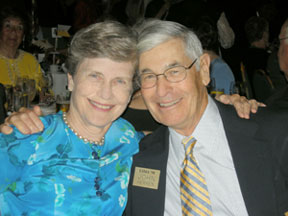 |
May 27, 2008
50th Reunion,
Tarrytown, NY |
|
I entered the Academy from the West Point Prep
School with the Class of 1957, but had trouble in electricity
my cow year and joined the class of 1958. When not studying,
I played virtually every intramural sport and enjoyed the camaraderie.
Upon graduation, I selected infantry as my branch, went through
basic Infantry, Airborne, and Ranger training at Ft. Benning,
GA prior to joining a fun group of my classmates and wives (Gibbins,
Browns, Evans, Zwick) with an infantry brigade in Germany. There
I was schooled in how to run a platoon and how to soldier by
a touch old first sergeant and two reserve captains who had
fought in WWII and Korea.
My next career highlight was commanding a rifle company for
18 months, 4 in combat. We went through a rigorous test of the
Army's new air assault concept and then deployed to the Central
Highlands in Vietnam as part of the 1st Cavalry Division Airmobile.
My battalion was involved in a number of combat operations,
the most fierce being the 14-17 November, 1965 battle at LZ
X-Ray, the la Drang Valley. My classmate, Tony Nadal, and I
fought side by side as company commanders in a ferocious three-day
engagement with elements of three North Vietnamese divisions.
(This battle is described in the book We Were Soldiers Once
and Young, by Moore/Galloway.
After Vietnam I taught ROTC and worked on an MA at Georgetown
University. I met and married my wife, Sally Hand, a lovely
young lady from Washington, DC. After the Armed Forces Staff
College, I was back in Vietnam on the J-3, MACV staff. I covered
I Corps and Special Forces as to their operational plans and
spent a lot of time visiting those commands. I was also the
Ops briefer for General Creighton Abrams's weekly battlefield
updates with his commanders, a very interesting task. On the
home front, Sally delivered Lisa, the first of our four children:
Lisa, Alice (who died in infancy), Michael, and Allison. Following
Vietnam were tours on the Army staff, a battalion command in
Germany, a recruiting area command, and the National War College.
I spent the next 15 years in NATO Policy, OSD, 11 years as a
civil servant. These were busy years at a level where I got
a real insight into how defense policy evolves. Sally and I
are enjoying retirement in Washington, DC. Besides travel, golf,
and two grandaughters, we do some volunteer work (Walker Reed
Wounded for me). I credit West Point as starting me on a rewarding
career, and I will always be proud of being a member of the
Long Gray Line.
|
| Memorial
Tribute contributed by family. |
|
|
| https://www.west-point.org/class/usma1958/special/50th%20Overview.pdf |
| Link
to reunion history book project for John Herren |
|
1961 Military Register
 |
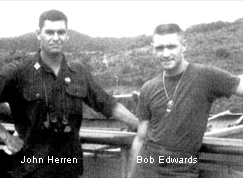
| August,
1965: John Herren aboard the USNS General Maurice Rose in
the Panama, CZ with fellow mate, Bob Edwards for the 32-day
trip beginning in New York and debarking in Quy Nhon, South
Vietnam via the Canal Zone and Pearl Harbor. Troops onboard
numbered 1,200 (1st Air Cavalry). |
 |
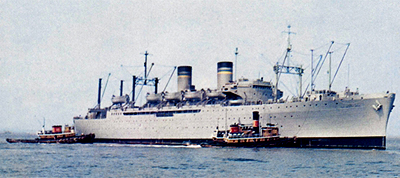 |
| USNS
General Maurice Rose, (T-AP-126) AP=USN Class Transport
Ship |
| August,
1965: John Herren aboard the USNS General Maurice Rose in
the Panama, CZ with fellow mate, Bob Edwards for the 32-day
trip beginning in New York and debarking in Quy Nhon, South
Vietnam via the Canal Zone and Pearl Harbor. Troops onboard
numbered 1,200 (1st Air Cavalry). |
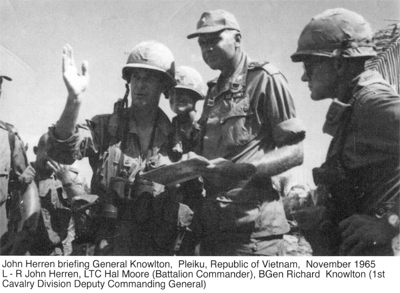 |
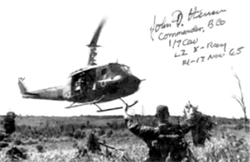 |
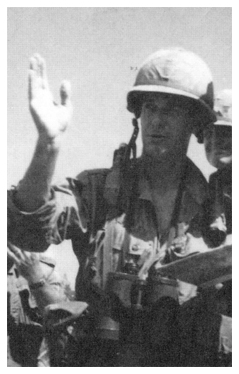
Above
photo found online as
"a signed photo of the la Drang offensive"
(14-17 November 1965)
personally signed by John Herren |
|
 |
|
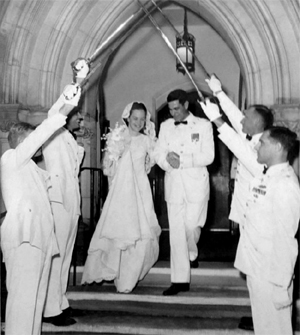 |
June
15, 1968
Major John Herren and Sally Grant Hand
Christ Episcopal Church
Georgetown, MD |
|
|
|
 |
|
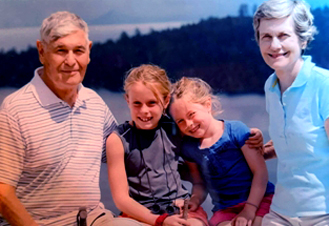 |
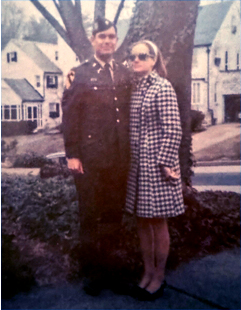
Left:
John and Sally taken shortly after their wedding on June
15, 1968 when John was headed for his second
tour of Vietnam
Above: John, Sally, Lisa, and Allison boating possibly around
1976 in Germany
|
|
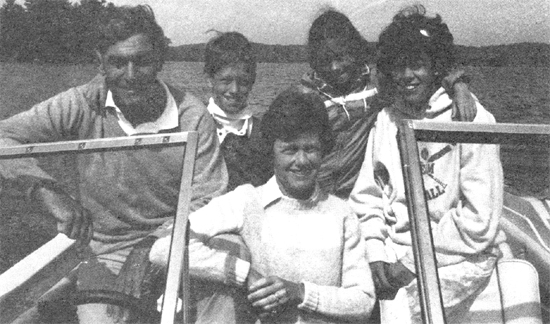 |
From
1988 30th Reunion Directory
Washington, D.C: Herren family on boat outing.
John, Sally, Michael, Allison, and Lisa |
|
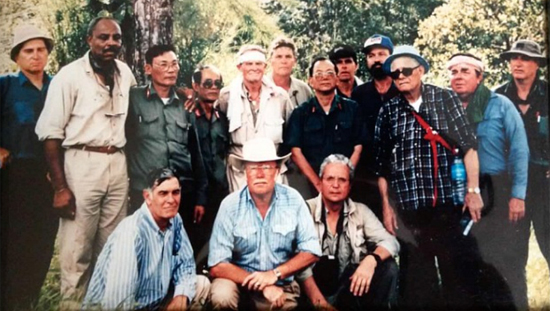 |
Revisiting
la Drang Valley Landing Zone; L-R: Foreground: John Herren....identify
others?
(Movie: "We
Were Soldiers Once")
youtube link above |
|
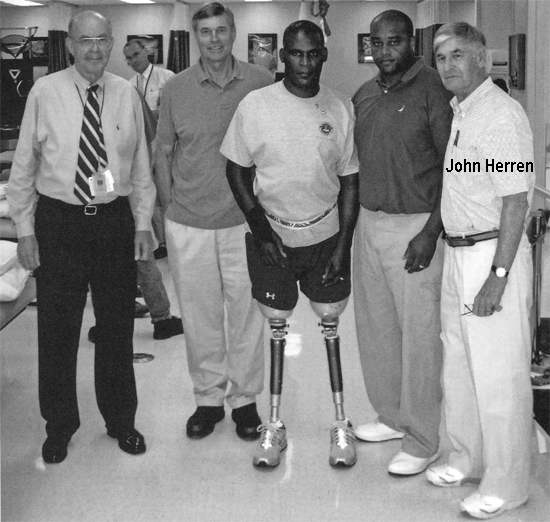 |
2004
+ 16 years: Cofounded Wounded Warrior Mentor Program at
Walter Reed Army Hospital
L-R: Mentors with two Wounded Warriors. L-R: Lee Miller
('58), Bruce Holmberg ('61), Wounded Warriors, John Herren
('58) |
History
of Wounded Warrior Program
As a result of the conflicts in Iraq and Afghanistan, many
severely wounded Soldiers and Marines are medically evacuated
to Military medical facilities. Because the military medical
system excels in saving lives – the “save rate”
exceeds 90%, unprecedented in modern warfare – the
number of critically wounded soldiers also is unprecedented.
In addition to the trauma of enduring lost limbs, many soldiers
suffer from Post Traumatic Stress Disorder (PTSD) and Traumatic
Brain Injury (TBl).
At any one time, there are hundreds of
wounded outpatients recovering at military medical facilities,
but only about 20% percent of those stay in the military.
A significant number leave the service, transitioning
into the Veterans Administration (VA) medical system,
and then move into civilian life.
Walter Reed Nurse Case Managers –
the nurses assigned to each Wounded Warrior – are
responsible for holistic care, from injury to wellness.
While the ratio of Case Managers to patients has improved
to 1:18 from around 1:50, Case Managers do not have the
time or resources to provide the one-on-one assistance
needed to help the soldier make either the transition
to a productive civilian life or to a new military career.
Recognizing this shortfall, four members
of the West Point Class of 1958, led by Lee Miller and
including Pete Brintnall, John Herren, and Bob Tredway,
started an informal program in November 2004 to help Wounded
Warriors at Walter Reed National Military Medical Center
(“Walter Reed”) focus on life after the military.
The program began by helping wounded Soldiers
and Marines evaluate their education alternatives. It
quickly became apparent that much more needed to be done.
And, as word got out about the program, the demand for
the program quickly outstripped the resources available.
In response to the need and increasing
demand, the original group reached out to the West Point
Class of 1961 for additional Mentors. As the program grew,
it attracted Mentors from other West Point Classes, graduates
of other services’ academies and other Veterans.
Over the years there have been over 700
Wounded Warriors successfully transitioned by the over
600 trained Mentors.
While the Mentor program at Walter Reed
is highly successful, its organizers quickly realized
that Wounded Warriors continued to face significant problems
after they left Walter Reed. At home or in VA hospitals,
they are without fellow warrior buddies and in strange
and not necessarily understanding environments. Warriors
and family members frequently called their Walter Reed
Mentors for a wide range of reasons, including seeking
advice on medication addiction, or to ask the Mentor for
help because the soldier or Marine remains isolated in
his/her room and the parents do not know where to turn.
This situation led WWMP to institute its
Follow-On Mentor Program, whereby a volunteer Mentor located
in or near a Wounded Warrior’s home town is paired
with the warrior and continues to provide the kind of
one-to-one advice, guidance that Mentors at Walter Reed
and other military care facilities provided. Predictably,
the Follow-On Mentor Program is an increasingly vital
part of the mentor effort.
While WWMP works primarily with Wounded
Warriors in military medical facilities in the National
Capital Area, WWMP has worked with other volunteers to
establish programs modeled after WWMP at military medical
facilities in other areas of the country.
|
|
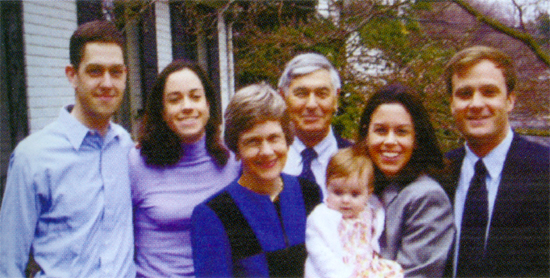 |
Washington,
D.C: Easter; April, 2005
L-R; Michael, Allison, Sally, John, Ellie (6 months) Lisa,
Charles (son-in-law) |
|
Replace
with appropriate Herren material
|
pic |
 |
|
 |
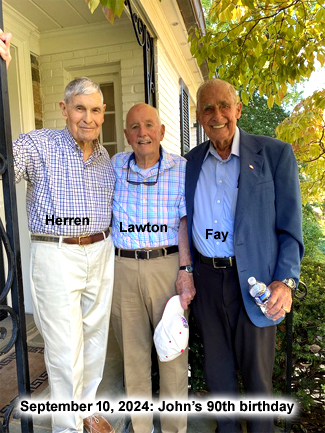
John's
90th Birthday
John Herren, George Lawton, Lee Fay |
|
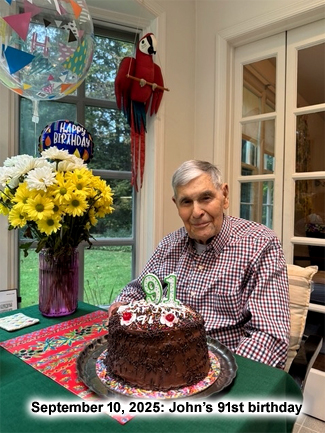
John's 91st Birthday
|
text for additional images
|
text for
additional images |
|
| Get
correct locations for Herren assignments and vacations. |
 |
 |
23 October-25
November, 1965
Pleiku, South Vietnam location image
coming |
 |
| Fort
Benning okay for Herren. |
la
Drange, South Vietnam location image
coming |
 |
 |
 |
|
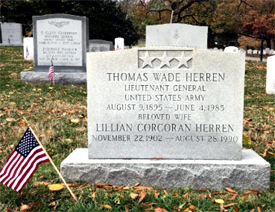 |
Arlington
National Cemetery
(left) John's parents buried in Arlington National Cemetery.
John Herren's burial to take place there sometime during 2027.
John's gravesite photo will appear online here at the time of
gravesite installation.
Video of memorial service on April 20, 2026:
https://www.youtube.com/@StColumbasEpiscopalChurch |
|
John
Daniel Herren
Colonel
B Company, 1st Battalion, 7th Cavalry
United States Army |


|

|



 |
X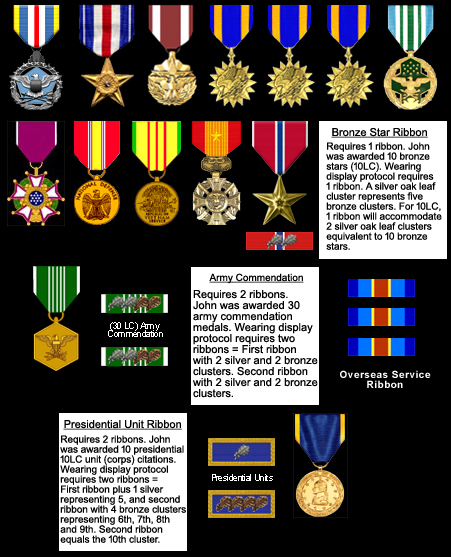
Defense Superior Service Medal; Silver Star; Meritorious Service
Medal; Air Medal (3); Joint Service Commendation Medal; Legion
of Merit; National Defeense Service Medal; Vietnam Service Medal;
Vietnam Gallantry Cross w/gold star (Corps Citation); Bronze Star
(10); Army Commendation Medal (30); Overseas Service Medal (3);
Presidential Unit Ribbon (10)
|
|
| From 1958 Howitzer |
| John Daniel Herren |
| "John" |
|
G-2 |
| Fort Oglethrope, GA |
|
Congressional |
| John
comes from an Army family and from a tour in the Army and is determined
to carry on the tradition set by a father and brother. The Academic
Department didn't make it easy for John; but an earnest desire
for a service career and his patient attitude assured his success
here and will continue to so in the future. His smile and pleasant
personality make him friends with all. |
 |
| Spanish Language
Club 4-3-2-1; Cadet Chapel Choir 4-3-2-1; Golf Club 2-1; Ski Club
2-1; Debate Council and Forum 1; Rifle Club 1; Corporal 2; Sergeant
1. |
|
|
|
| February,
2026: Lives in Bethesda, MD. Died February 7, 2026. |
| Music:
"You Raise Me Up" |
|
Home
| Then
| Then & Now/04 | Then
& Now/08 | WP03
| SanAnt/04 |
SanF/05 | WP/08
Tucs/09
| Den10
| Wash/12
| WP/13 | Roomies
| YrBk/Pg1/Pg2
| Memoriam | Close
©2026-csheddgraphics All rights reserved.
All images and content are © copyright of their respective copyright
owners. |
|